Edge vs Cloud Computer Vision: Why On-Premise Wins for European Manufacturers
For a European operations or engineering leader, the decision about where computer vision runs is not only a technical one. It is a question about who holds your video data, what it costs to scale, and how much regulatory friction you are willing to take on. This article compares edge and cloud computer vision in plain terms, and explains why on-premise processing has become the default choice for manufacturers and logistics operators across the EU.
A note before we start: this article describes how data location affects regulatory exposure. It is general information, not legal advice. For a specific compliance position, confirm with your data protection officer or counsel.
The two architectures, briefly
Cloud computer vision sends your camera feed off site to a provider's servers, where the model runs and sends a result back. The appeal is that you do not manage hardware. The cost is that your video, including any footage of people and processes, leaves your premises, travels over a network, and is processed somewhere you do not control.
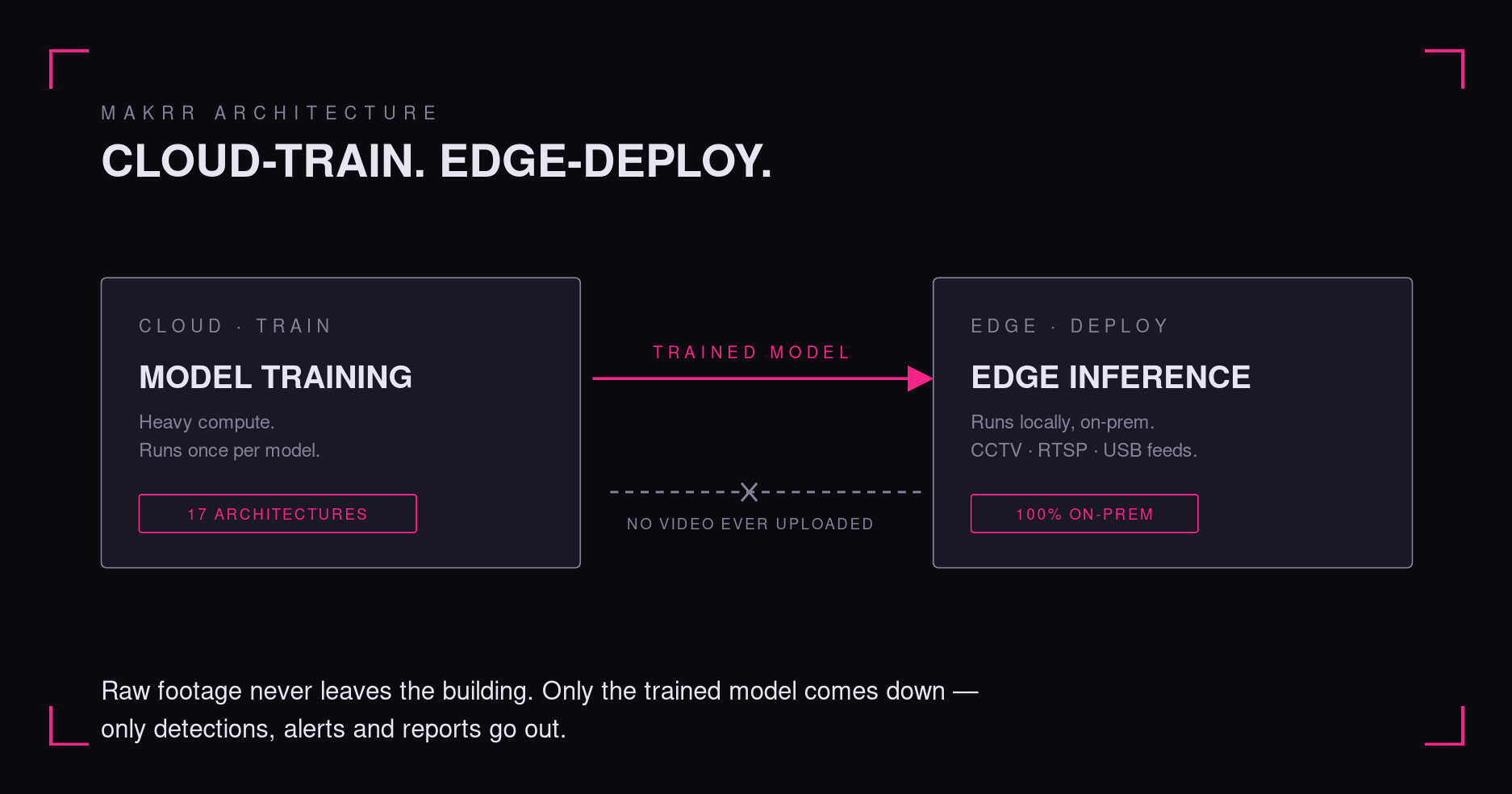
Edge computer vision runs the model on a device at the line, inside your own facility. The video is analysed locally and never has to leave the building. The model can still be trained in the cloud, where the heavy compute lives, and then deployed down to the edge device for inference. This cloud-train, edge-deploy split is the model MAKRR uses.
The difference sounds academic until you map it onto four things every European operator cares about: data sovereignty, regulation, cost, and latency.
1. Data sovereignty: your footage stays yours
Factory and warehouse cameras capture more than products. They capture employees, sometimes visitors, sometimes the layout and methods that make your operation competitive. The moment that footage is streamed to an external cloud, you have created a copy of sensitive operational and personal data outside your walls, and you have taken on responsibility for how it is transmitted, stored and deleted there.
With edge processing, inference happens on hardware you own, on premise. The raw video does not need to leave the site at all. What you keep is the output you actually wanted, the detection, the count, the alert, rather than a growing archive of footage sitting on someone else's servers. For most European operators, "the data never leaves the building" is the single sentence that turns a six-month review into a quick yes.
2. GDPR and the EU AI Act: less surface area, less friction
Two regulations shape any camera-based system in Europe. It is worth being precise about what each one actually requires, because the reality is less alarming than the headlines, and edge processing helps with both.
GDPR applies whenever footage contains identifiable people, which on a factory floor or in a warehouse it usually does. GDPR does not forbid camera analytics. It asks you to minimise the personal data you process, to have a lawful basis, and to keep that data secure and no longer than necessary. Edge computer vision aligns naturally with data minimisation: because the analysis happens locally and only the result is retained, you are not shipping or storing identifiable video off site. The smaller your data footprint, the smaller your obligations and your risk.
The EU AI Act is phasing in, with its core framework applying from 2 August 2026 and the heaviest "high-risk" obligations for stand-alone systems deferred to December 2027 and for AI embedded in regulated products to August 2028, following the 2026 Omnibus amendments. The important nuance for an operations leader: AI used purely for quality control, efficiency or process automation is generally not classified as high-risk, unless a failure could endanger health or safety. In other words, a model that checks whether a part is present or a weld is complete is, in most cases, outside the high-risk tier altogether. Edge deployment does not change that classification, but keeping processing on premise keeps your governance story simple and your data flows easy to document, which is exactly what auditors and DPOs ask to see.
The combined effect is fewer moving parts to explain. A system that trains in the cloud on footage you chose to upload, and then runs locally without streaming live video off site, is far easier to bring through an internal review than one that pipes everything to an external service continuously.
3. Cost: edge changes the unit economics
Cloud computer vision is usually billed per inference, or per minute of video processed. That model is fine for a pilot on one camera. It becomes a problem the moment you succeed and want to scale, because every additional camera and every additional frame adds to a recurring bill that grows with your own usage. The better the system works, the more it costs to use.
Edge flips this. Inference runs on hardware you own, so a single trained model can cover many cameras and lines without a per-detection charge. Scaling is a capital decision about devices, not an operating cost that compounds with volume. For a 50 to 1,000 person operator rolling a detector from one line to a whole site, the difference over a year is substantial, and it is predictable.
4. Latency and resilience: decisions at line speed
If a detection has to trigger an action, rejecting a unit, stopping a line, sounding an alert, a round trip to the cloud and back adds delay you may not be able to afford at line speed. Edge inference is local, so the decision happens in milliseconds, next to the event. Modern edge accelerators handle this comfortably; MAKRR's runtime reaches up to 260 frames per second on edge hardware.
Edge also removes a dependency. A cloud system stops seeing when your internet connection drops. An on-premise model keeps running through a network outage, because nothing it needs is on the far side of that connection.
Where cloud still has a place
Edge is not the answer to everything. Training a model is compute-heavy and well suited to the cloud, which is why MAKRR trains there and deploys to the edge rather than forcing one or the other. Cloud-only inference can also make sense for low-volume, non-sensitive, non-time-critical analysis where you genuinely do not want to manage any hardware. The point is not that cloud is bad, it is that for continuous, camera-based inspection of a European operation, the data, cost and latency arguments line up behind edge.
The takeaway for European operators
If your computer vision runs continuously on cameras that capture people and processes, on-premise edge deployment gives you the same detection capability with a smaller data footprint, simpler GDPR and EU AI Act governance, predictable scaling costs, and decisions at line speed. The footage stays in the building, and only the answers leave.
MAKRR is built on exactly this split: train in the cloud, deploy to the edge, keep your data on site. To see how the architecture maps onto your own setup, book a 30-minute demo or start a free trial. You can read more about the platform for technology teams and industrial operations.
FAQs
-
Edge computer vision generally creates a smaller GDPR footprint, because video is processed locally and does not leave your premises. You retain the detection result rather than streaming or storing identifiable footage off site, which supports the data-minimisation principle GDPR is built around. This is general information, not legal advice.
-
In most cases, no. AI used solely for quality control, efficiency or automation is generally not classified as high-risk under the EU AI Act unless a failure could endanger health or safety. The core framework applies from 2 August 2026, with the heaviest high-risk obligations deferred to 2027 and 2028. Confirm your specific case with counsel.
-
Cloud computer vision processes video on external servers off site. Edge computer vision runs the model on a device inside your facility, so video is analysed locally. MAKRR trains models in the cloud and deploys them to the edge for inference.
-
Over time, usually less. Cloud is typically billed per inference and grows with usage, while edge runs on hardware you own, so one model can cover many cameras without a per-detection fee. Scaling becomes a device decision rather than a compounding operating cost.
-
Yes. Because inference runs locally on your own hardware, an on-premise model keeps detecting through a network outage. An internet connection is needed for cloud training and updates, not for day-to-day inference.
How to Add Computer Vision to Your Existing Factory Cameras (Without a Data Science Team)
It All Begins Here
Most factories in Europe already have the two things they need to automate visual quality checks: cameras on the line, and a clear idea of what "good" and "bad" look like. What they do not have is a machine learning team to turn those cameras into something that decides for them. This article explains how to add computer vision to the cameras you already run, without writing code and without hiring a data scientist, and what a realistic first project looks like.
The gap between having cameras and having computer vision
A camera records. It does not decide. To go from a video feed to "this weld is incomplete" or "this tray is missing a part" or "that pallet is in the wrong bay", you need a model that has learned to recognise the thing that matters to you.
Traditionally there were only two ways to build that model, and both are out of reach for a 50 to 1,000 person manufacturer or logistics operator:
Hire a machine learning team. Data scientists are scarce and expensive across the EU, and a single quality-inspection model is rarely enough work to justify a permanent hire. Most operations leaders cannot win that headcount, and would not know how to manage it if they did.
Buy a traditional machine-vision system. Rule-based machine vision works, but it is rigid. It is configured by a systems integrator for one part on one line, and every time the product, the lighting, or the line changes, the integrator has to come back. The cost and the lead time make it impractical for anything that varies.
So the work falls back to people. Manual visual inspection is slow, it is inconsistent between shifts, and it does not scale. Industry estimates put a single experienced human inspector at catching roughly 80 percent of defects, which means around one in five real defects still escapes, even before fatigue and turnover are considered. In Europe, where loaded inspection labour commonly runs in the region of 30 to 45 euros or dollars per hour, that is an expensive way to miss things.
What "no-code computer vision" actually means
No-code computer vision removes the machine learning team from the process. Instead of a research project, building a detector becomes a workflow that a quality engineer or an operations lead can run themselves:
Upload footage or connect a live feed. You point the platform at recordings you already have, or link a live camera. Standard CCTV, RTSP and USB cameras are supported, as are drones and robots, so there is usually no new hardware to buy.
Label what matters. You draw boxes around the objects, defects or behaviours you care about: a missing component, a crack, a person in a restricted zone, a specific item on a sorting line. You are teaching the system using your own eyes and your own examples.
Train with one button. The platform trains a detection model in the cloud. There is no code, no notebook, and no parameter tuning. A deployable model can be ready in under a day rather than a quarter.
Deploy to the edge. The trained model is pushed to a device at the line, where it runs locally on the camera feed and produces detections, alerts and reports.
The working rule is simple: if a trained member of your staff can see it, the system can learn it.
Why running it on your own hardware matters
The second half of the idea is where the economics work. With MAKRR, the model is trained in the cloud but it runs on your edge device, on premise, directly at the line. That choice has three practical consequences for an operations team.
Your footage never leaves the building. Inference happens locally, so the video of your plant, your people and your processes stays on site. For European operators this is the difference between a quick internal decision and a long data-protection review. (More on the GDPR and EU AI Act angle in our companion article.)
One model can cover many cameras without a per-detection bill. Because inference runs on hardware you own, scaling a detector from one line to ten is not ten times the cloud cost. You add devices, not invoices that grow with every frame analysed.
You are not locked to one vision vendor. The runtime is hardware-agnostic and ONNX-based, running on common edge accelerators such as NVIDIA Jetson and Hailo. You can standardise on the hardware that suits your plant rather than the hardware a single supplier insists on.
What a realistic first project looks like
The most common mistake is trying to automate everything at once. The teams that succeed pick one narrow, high-value check and prove it, then expand. Good first candidates share three traits: a human can see the answer clearly, the answer happens often, and getting it wrong is costly.
In practice, the four checks most quality and operations teams start with are:
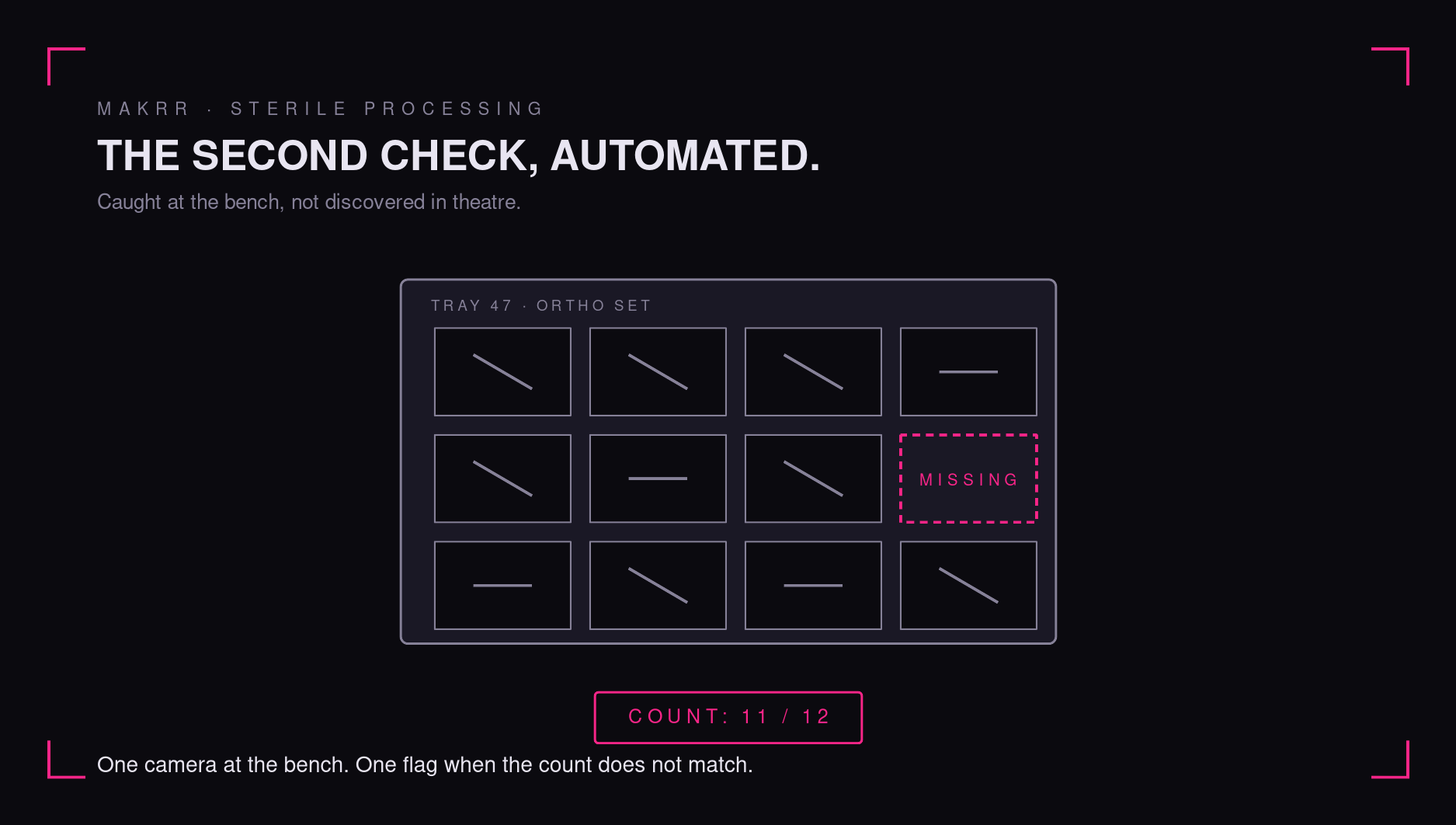
Presence or absence. Is the part, the label, the seal, the cap actually there before the unit moves on?
Counting. How many items, pallets, or parcels, and does the count match the order or the manifest?
Defect detection. Cracks, scratches, contamination, incomplete welds, print or coating faults.
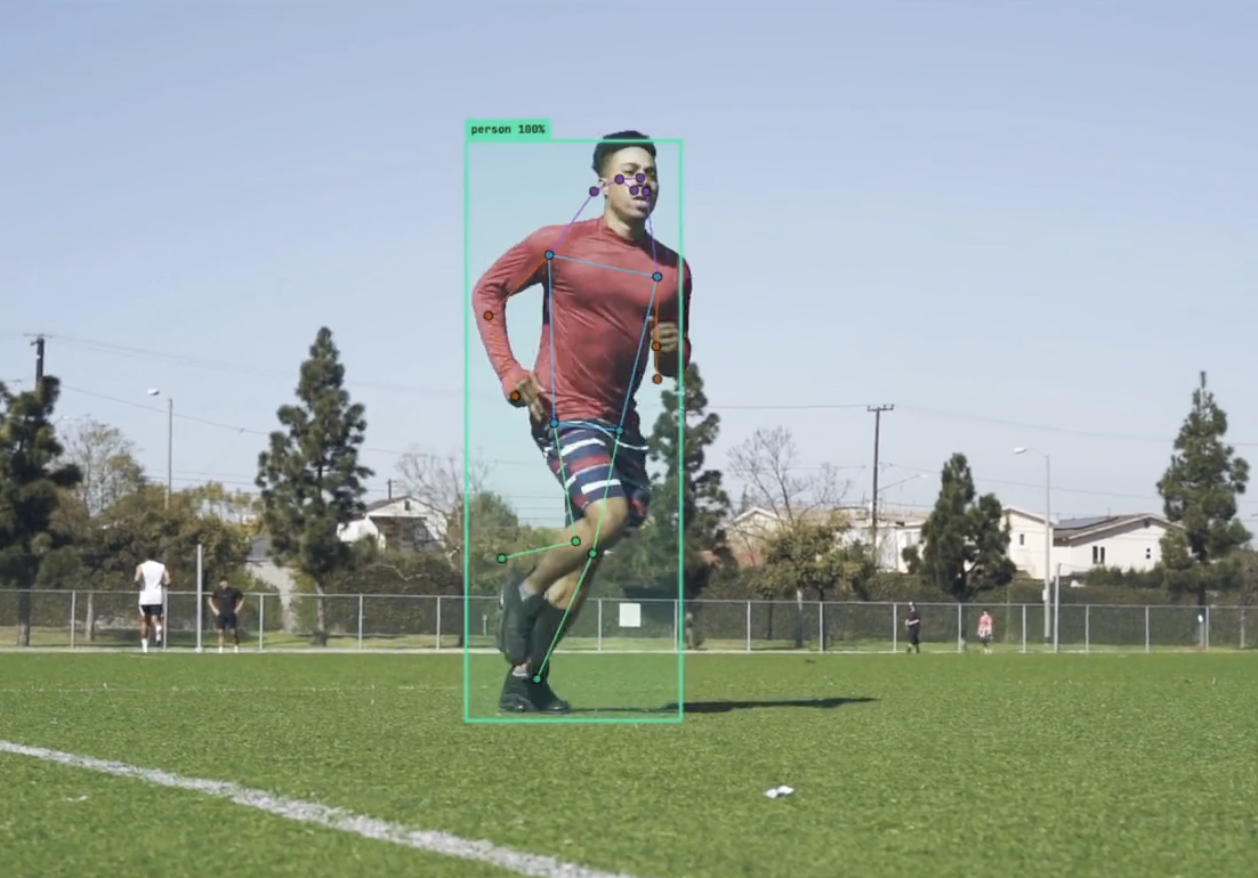
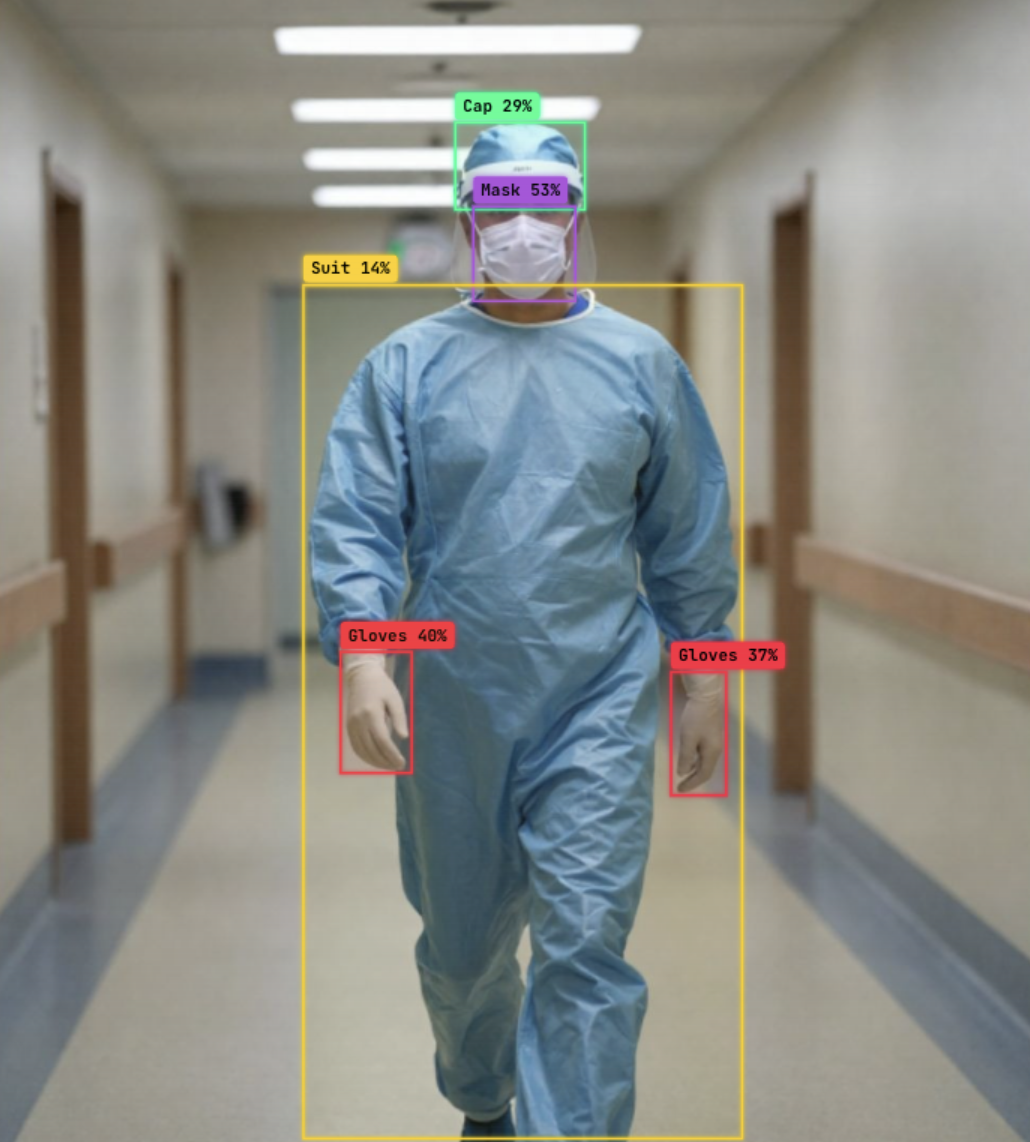
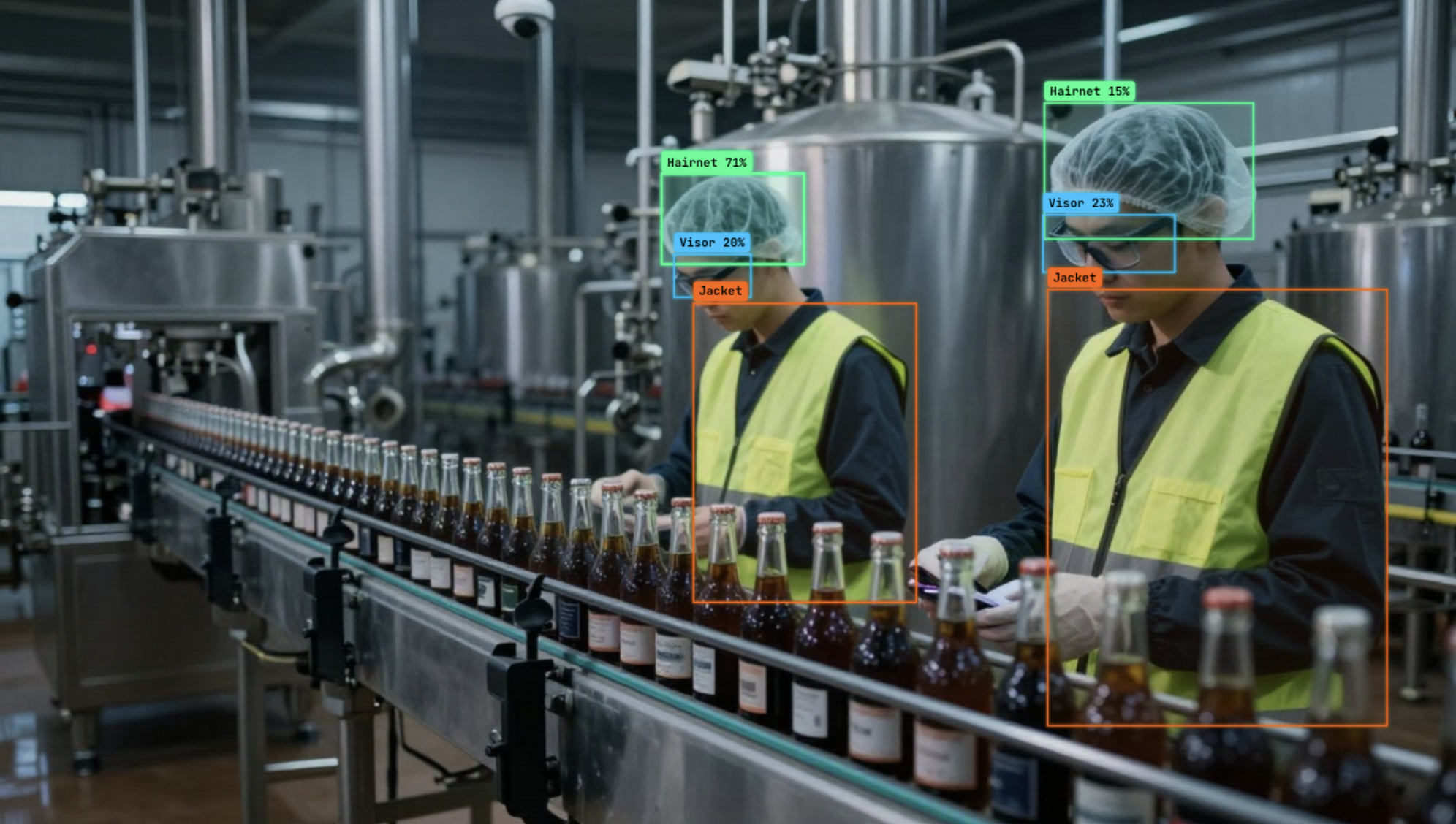
Behaviour and safety. A person in a restricted zone, missing protective equipment, a process step skipped.
Start with one of these, on one line, with footage you already have. A first deployable model in days gives you a real result to take to the rest of the business, instead of a year-long programme that has to be justified before it has shown anything.
MAKRR's own origin is an example of starting narrow: the platform began with waste-sorting audits at a facility in Tartu, Estonia, where the system measured waste inflow, material composition and item counts from camera footage. The same underlying task, recognising a pattern in an image, is what now runs on manufacturing and logistics lines.
Getting started
You do not need a budget for a data science team, and you do not need to replace your cameras. You need one clearly defined check, some footage, and an afternoon to label it.
If you want to see it run on a problem from your own line, book a 30-minute demo, or start a free trial and train your first model this week. For sector-specific examples, see how teams use MAKRR in industrial operations, and for pricing that scales by device rather than by detection, see our pricing.
-
No. No-code computer vision platforms let a quality engineer or operations lead upload footage, label the objects or defects that matter, and train a model with one button. There is no programming and no machine learning expertise required.
-
In most cases, yes. MAKRR works with the standard CCTV, RTSP and USB cameras you already run, as well as drones and robots, so a first project usually needs no new hardware.
-
A deployable detection model can be ready in under a day, and pushed to an edge device at the line shortly after. The first narrow check is the fastest way to prove value before scaling.
-
No. Models are trained in the cloud but run on your own edge hardware on-premise, so inference happens locally and footage stays on site.
-
If a trained member of staff can see it, the system can learn it. Common first uses are presence or absence checks, counting, defect detection, and safety or behaviour monitoring.