
Computer Vision in Hospitals: Six Use Cases That Have Nothing to Do With Diagnosis
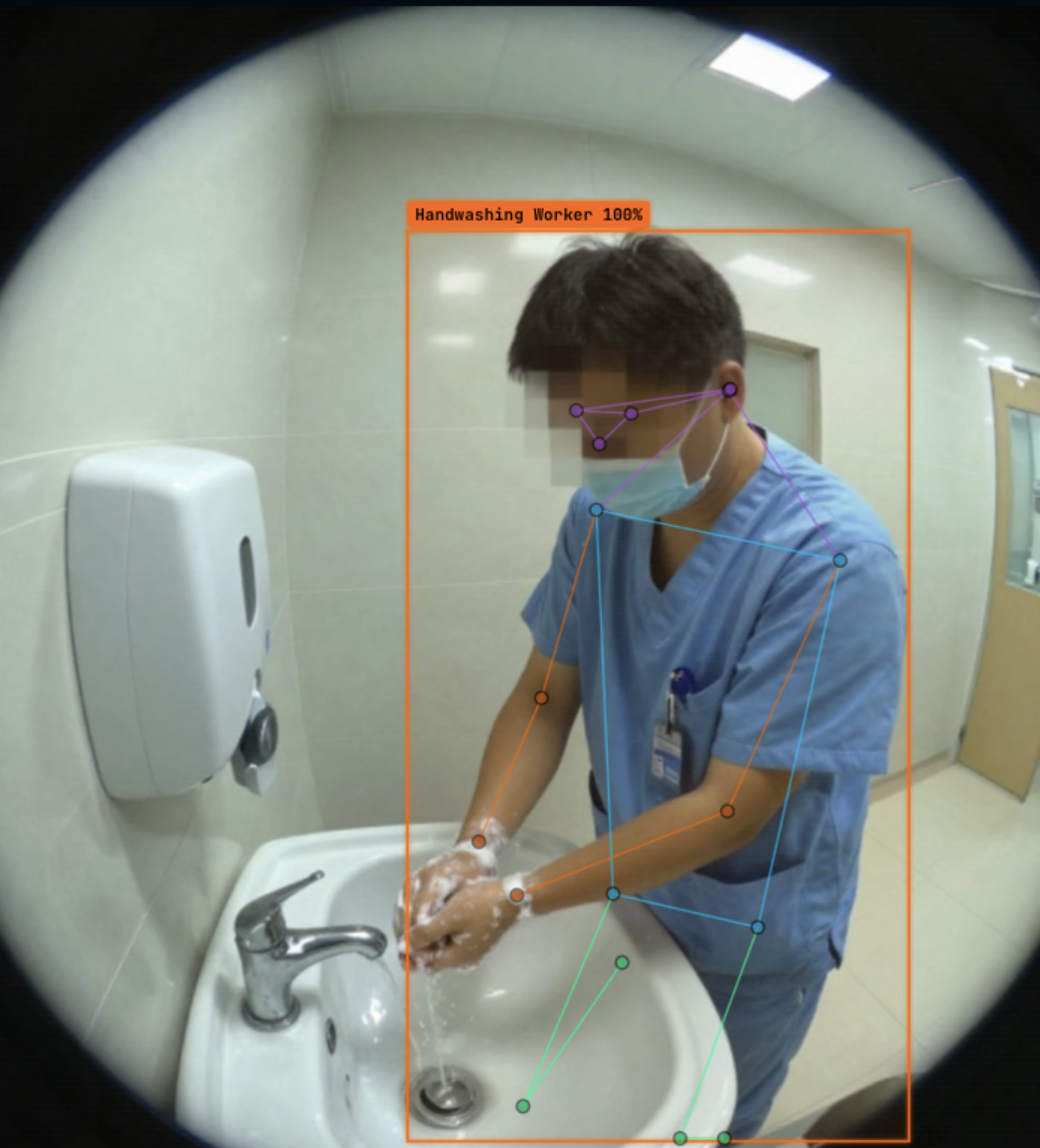
When people hear about AI in healthcare, they usually picture radiology: an algorithm reading an X-ray. That work matters — of the 1,451 AI-enabled medical devices the FDA had authorised by the end of 2025, about 76% are radiology tools — but it hides a larger and less discussed opportunity. Hospitals run on visual checks. Did staff sanitise their hands before entering the room? Is the corridor to the emergency exit clear? Is the sharps container overfilled? Did a patient just climb out of bed unattended?
Today, nearly all of these checks are performed by people, on foot, with clipboards, a few hours per month. The rest of the time, nobody is watching. Computer vision changes that arithmetic, and it does so without touching a single medical record or making a single clinical decision.
This post covers six operational use cases for computer vision in hospitals, what the evidence says about the problem each one solves, and the privacy architecture that makes camera based monitoring acceptable in a clinical environment.
Why manual safety monitoring fails in hospitals
Two structural problems undermine manual auditing.
The first is coverage. A hand hygiene audit performed by a human observer typically samples a few hours per month in selected wards. Everything outside that window goes unmeasured. The Institute for Healthcare Improvement Global Trigger Tool, the standard method for detecting adverse events, has shown that systematic review finds far more adverse events than voluntary reporting captures — at least ten times more, in a landmark Health Affairs study — which tells us how much harm routine measurement misses.
The second is the Hawthorne effect. People behave differently when they know they are being observed. A BMJ Quality & Safety study using electronic monitoring found hand hygiene event rates were roughly threefold higher when auditors were visible than when they were not. Compliance rates recorded during announced audits are systematically higher than everyday reality, which means hospitals make infection control decisions using numbers that flatter them.
The problem is not new. The 1999 Institute of Medicine report To Err Is Human established preventable medical error as a leading cause of harm and started the modern patient safety movement. The measurement frameworks it inspired exist and work. What has been missing is the labour to run them continuously. That is the gap computer vision fills.
AI hand hygiene compliance monitoring
Hand hygiene is the single most cost effective infection prevention measure in medicine, and the hardest to measure honestly. The World Health Organization Five Moments for Hand Hygiene define exactly when staff should wash or sanitise. Camera based monitoring at ward entrances, patient rooms and scrub stations can log compliance events against those moments continuously, around the clock, without an observer standing in the corridor.
The approach is proven. Stanford researchers installed privacy preserving depth sensors — which capture silhouettes, not identifiable video — above dispensers in a children's hospital, and the vision algorithm matched human auditors with a lower false-negative rate than human observation (Stanford Medicine summary).
The commercial pressure behind this use case is accreditation. Joint Commission International audit preparation explicitly includes hand hygiene compliance monitoring and improvement programmes, and accredited hospitals must document compliance goals and progress against them. Electronic surveillance is an accepted mechanism for that documentation. A vision system does not replace the infection prevention team. It hands the team a dataset they have never had.
PPE detection and clinical zone compliance
The same detection approach verifies masks, gloves and gowns, and can check that the correct protective equipment is worn per zone: intensive care, isolation rooms, operating theatre entry. It can also alert when a person enters a restricted zone. For infection prevention and occupational safety teams, this converts spot checks into continuous coverage using the cameras many facilities already have.
Fall risk monitoring and patient safety
Falls are among the most common adverse events reported in hospitals and a standard trigger category in adverse event measurement. Vision systems can detect a patient on the floor, or climbing out of bed unattended, and alert the nursing station immediately — before the thud, not after.
The evidence here is strong and recent. An Italian hospital study of AI video monitoring found a 79% reduction in fall risk for monitored patients, and a separate clinical evaluation of overnight video monitoring recorded a 45.5% drop in fall rates. Published hospital deployments of continuous monitoring platforms have demonstrated that this class of system works at scale in real wards, which makes fall detection one of the most validated use cases in the field.
Ward operations and patient flow monitoring
Beyond safety events, cameras can report operational state: bed occupancy, stretcher and wheelchair availability, queue length and waiting times in emergency and outpatient areas, and corridor obstructions along emergency routes. Operations teams get a live dashboard metric from the first day of deployment, which is often the fastest way for a hospital to see value from vision technology.
Pharmacy, supply and clinical waste monitoring
Hospital pharmacies and central supply departments run on visual verification: packaging condition, label legibility, expiry dates, goods receipt, cold chain doors left open. Each of these is a detection task. So is waste segregation, where incorrect disposal, for example general waste entering a clinical waste stream or an overfilled sharps container, creates both an infection risk and a regulatory exposure that almost no dedicated product currently addresses.
The privacy architecture that makes this acceptable
None of the use cases above requires knowing who anyone is. That is the central design principle, and it is worth stating plainly, because privacy is the first question every hospital data protection officer asks.
A properly designed clinical vision system uses generic person and equipment detection, with no biometric identification. Faces are blurred on the device before anything is stored. What gets logged is the event, a missed sanitisation, a fall, a blocked corridor, not raw video. Retention is configurable. And when models run on edge devices inside the hospital, on premises, footage never leaves the hospital network at all. (If you have read our piece on edge versus cloud computer vision, you already know why "the data never leaves the building" is the sentence that turns a six-month review into a quick yes.)
This architecture aligns with the requirements of the GDPR and the EU AI Act, and it answers the data residency requirements that health regulators in Europe, the Gulf and beyond increasingly enforce. As always: this is general information, not legal advice — confirm your specific case with your DPO or counsel.
Why hospitals do not need a data science team for this
The traditional objection to all of the above is cost and rigidity. Dedicated single purpose monitoring systems are expensive per installation and take months to deploy, and every new detection need has historically meant a new custom development project. That economic model is what no code computer vision platforms change. When a hospital team can annotate examples, train a model and deploy it to edge hardware connected to existing cameras, in weeks rather than months, the long tail of visual monitoring problems becomes addressable: not just the two or three use cases a vendor productised, but the specific problems each facility actually has. The working rule is simple. If a trained staff member can see it, a vision system can learn it.
Where this is heading next
Two developments are worth watching. The first is the automation of adverse event measurement itself, using AI to run trigger detection across records continuously instead of manual chart sampling, with clinicians reviewing what the system surfaces. The second is coding quality assurance, flagging mismatches between documented diagnoses and assigned classification codes before claims are submitted, a problem that costs health systems real money in denials and distorts national health statistics. Both remain earlier stage than the camera based use cases above, and both point in the same direction: measurement that used to be sampled becomes continuous.
-
Not in a properly designed system. Detection is generic (a person, a fall, missing PPE), faces are blurred on device, and events rather than raw video are logged. Individual identification is neither required nor appropriate for compliance monitoring.
-
In many cases yes. Systems that support standard camera protocols can run detection on existing infrastructure, with fixed cameras added only where coverage gaps exist.
-
Operational monitoring of hygiene, safety and flow does not diagnose or treat patients, and is designed to stay outside medical device classification. Clinical applications are a separate category with separate regulatory requirements.
-
Published studies say yes. An Italian hospital study found a 79% reduction in fall risk for patients monitored with AI video analysis, and a separate overnight video monitoring evaluation recorded a 45.5% drop in fall rates.
-
A scoped pilot, one ward or department, one detection class, defined success metrics, typically runs 8 to 12 weeks.